
CONTACT US
We started photographing copper tube at the cutting station about three months ago, and the change has already paid for itself. Not because we were having a flood of claims—we were not—but because the claims we did have were the kind that drag on. A customer would call and say a tube arrived with a dented end or an ovalized section. We would check our loading photos, which showed the bundle looking fine, and then we would be stuck. The damage could have happened at cutting, at packing, at loading, in transit, or at the customer’s dock. Without a record at the cutting stage, we were guessing, and guessing in a claim conversation is expensive.
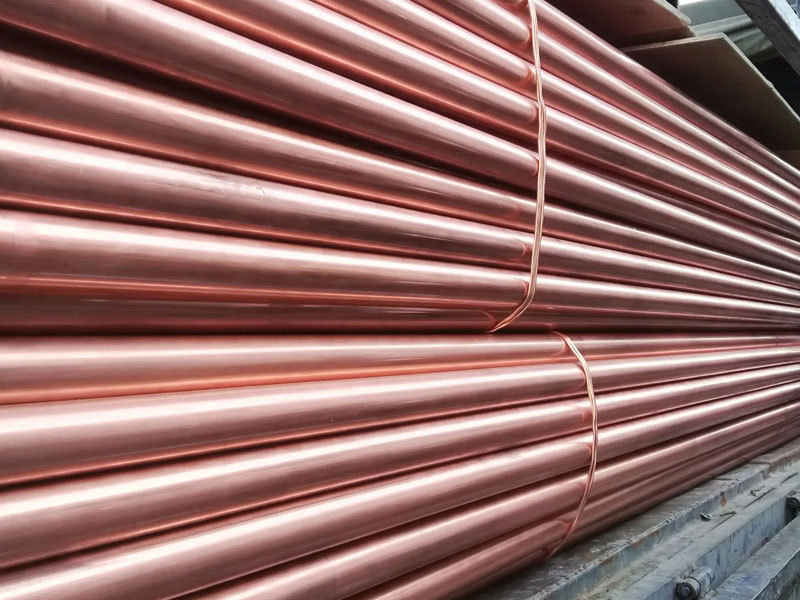
The cutting station is the first point where the tube is handled individually rather than as a bundle. The coil comes off the de-coiler, goes through the straightener, and gets cut to length. That is where the tube is most vulnerable to the kind of damage that causes claims: the cut end can be burred or deformed, the straightener can leave a mark if the rolls are not set right, and the tube can pick up a dent if it is stacked carelessly after cutting. Those are all things we can control, but only if we know they are happening. A photo taken at the cutting station, before the tube goes into the bundle, shows the condition of the tube at the point where it leaves our process. If there is a defect, we catch it there. If there is no defect, we have a record that the tube was clean when it left the saw.
The photos are not glamorous. Each cut length gets a quick shot of the cut end, a shot of the tube alongside a measuring tape or a length gauge, and a shot of the bundle tag with the heat number and the order number visible. If the tube has a visible mark or a suspect area, we take an extra close-up and note it on the inspection record. The whole process adds maybe thirty seconds per bundle. That is not nothing on a busy day, but it is less than the time we used to spend on the phone trying to reconstruct what happened to a disputed tube.
The cut end is the most important part of the photo set. Copper tube is often judged by its cut quality. A burr that is too large will interfere with a fitting. A cut that is not square will leave a gap in a brazed joint. A deformed end—ovalized or dented—will not seal. Those are the defects that generate claims, and they are exactly the defects that are hard to attribute after the tube has been handled by a trucker, a warehouse crew, and a customer’s receiving team. A photo of the cut end, taken immediately after the cut, establishes a baseline. If the customer later sends a photo of a burr, we can compare the two. Sometimes the burr is ours, and we fix it. Sometimes it is not, and the conversation shifts to where the damage actually occurred.
We also photograph the tube on the measuring table, with the length gauge visible. That sounds excessive, but length disputes are more common than you might think. A customer orders 20-foot lengths and receives 19-foot-10-inch lengths, and the question is whether the tube was cut short or whether the customer’s measurement is off. A photo with a gauge does not settle every argument, but it gives both sides a common reference. We have used it twice to resolve a length question without a return or a credit. That is a small win, but small wins add up.
The photos are stored against the order number and the heat number, not on someone’s phone. That matters. A photo that lives in a text thread is not a record. A photo that is attached to the order in our system can be pulled up months later if a claim surfaces after the tube has been installed. We have not needed to go back that far yet, but the system is there. The point is not to build a case against the customer. The point is to have a factual basis for the conversation, so it does not turn into a memory contest.
The change has not eliminated claims. Copper tube is a soft product, and it can be damaged in ways that no photo can prevent. But the claims we do get are resolved faster, and the ones that are clearly not our responsibility are easier to decline without damaging the relationship. A customer who sees a timestamped photo of a clean cut end is more willing to accept that the dent happened after the tube left our floor. That is not a legal argument. It is a trust argument, and it works better than a warranty clause.
We are now looking at extending the photo practice to the packing stage, so there is a record of the tube in the bundle before it goes on the truck. That would close the last gap in the chain. The cutting photos are the foundation. The packing photos would be the next layer. Neither replaces the customer’s own incoming inspection, but together they make the claim conversation shorter and more honest. That is the goal.


Get real-time quotes
Interested? Leave your contact details.